
Water-fed pole window cleaning is how most professional rounds in the UK now clean: purified water pumped up a telescopic pole to a soft brush, scrubbing and rinsing the glass from the ground. No soap, no ladders, and the glass is left wet, drying naturally, spot and streak free.
If your cleaner leaves your windows dripping and you’ve wondered how that can possibly work, this is the explanation. We use water-fed pole systems every working day on our Dorset round, so you’re getting the info from the people holding the pole.
What a Water-Fed Pole System Is
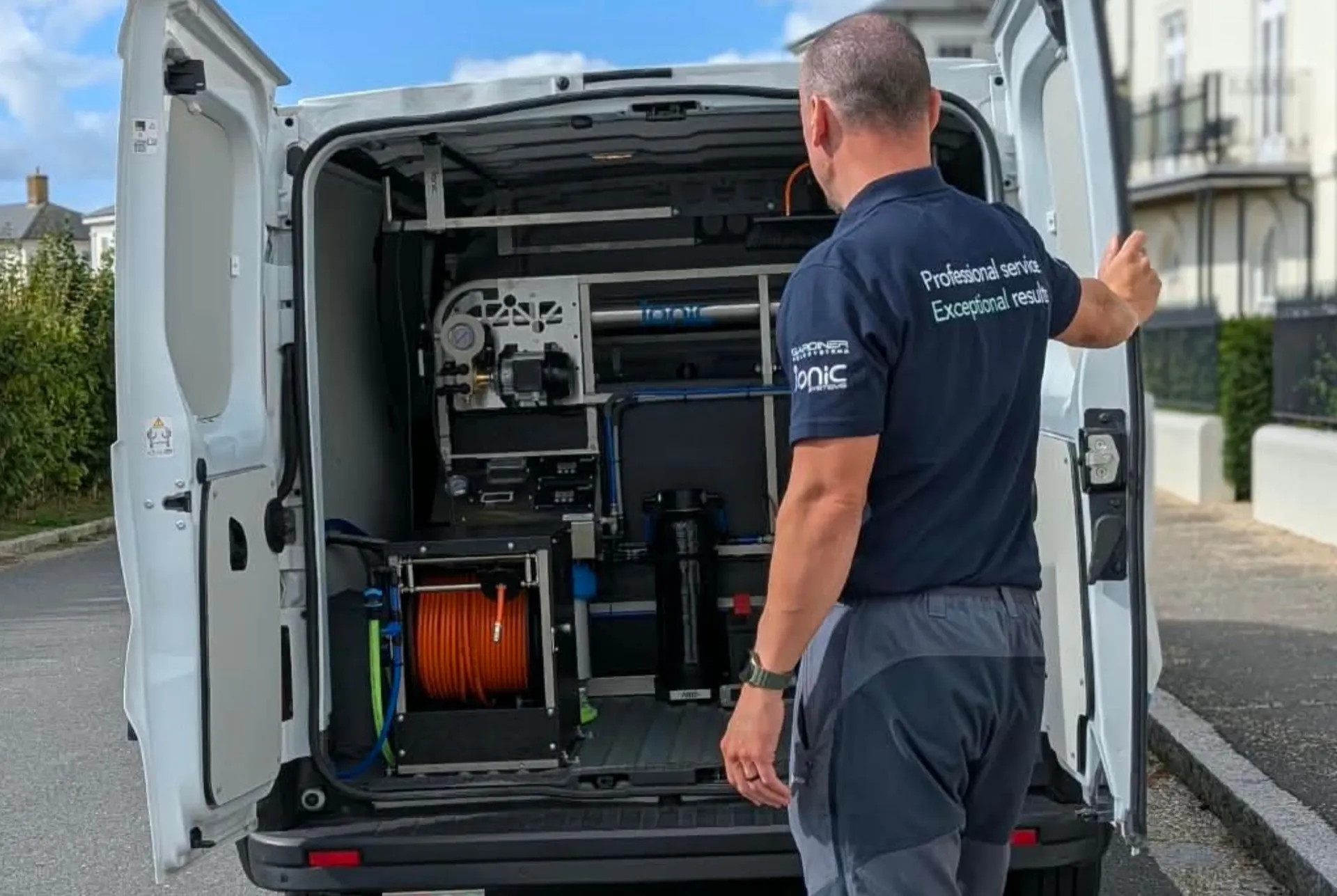
The equipment is beautifully simple. A mobile tank of purified water (usually custom fitted in a van), a pump, a length of hose, and a carbon-fibre pole with a nylon brush head that scrubs while jets rinse.
The pole telescopes to reach upstairs and third or fourth-storey glass from the ground.
As they scrub, the operator watches the run-off: when it stops carrying dirt, the pane gets a final rinse and moves on. The clever part isn’t the pole. It’s the water.
How Pure Water Cleans Without Detergent
Tap water is full of dissolved minerals, which is why washing a car with a hose leaves white spots. Water purity is measured in TDS, total dissolved solids, and UK tap water typically reads 100–300 parts per million.
The water in a professional system has been through filtration and deionisation until it reads 000 on the TDS meter. Nothing dissolved in it means nothing left behind when it dries.
Pure water is also slightly “hungry”. Stripped of its minerals, it actively pulls dirt off the glass, which is why it cleans effectively with no chemicals at all.
Water-Fed Pole vs Traditional Squeegee
The old method still has its place, and an honest comparison shows where each wins:
| Water-fed pole | Traditional squeegee | |
|---|---|---|
| Upstairs glass | From the ground, no ladders | Ladder against the wall |
| Frames and sills | Cleaned every visit | Usually glass only |
| Drying | Spot-free, dries naturally | Depends on the wipe |
| Detergent residue | None | Soap film unless detailed off |
| Ground-floor interiors | Not suitable | The right tool |
| Shopfront detailing | Adequate | Often crisper |
For exterior residential work, the pole wins on safety, reach and frame cleaning. Traditional methods still make sense inside and on some commercial glass, which is why good firms carry both.
Why the First Clean Matters
One honest caveat: the first pure water clean on neglected glass can disappoint. Years of soap residue and grime leach out of frames and channels for a day or two afterwards, occasionally leaving runs on the fresh glass.
That’s why a proper first clean is slower and more thorough, deep-scrubbing the frames and channels so there’s nothing left to leach. By the second visit the system shows what it can really do.
No Ladders Is the Underrated Benefit
Falls from height remain one of the most common causes of serious injury at work in Great Britain, and ladders feature in a large share of them, which is why the Health and Safety Executive’s work-at-height guidance pushes ground-based alternatives wherever they exist.
For your house, the benefit is quieter: no ladder feet on the flower beds, no scuffs on the render, and no one leaning hardware against your gutters. Homes with delicate render, like on our Poundbury round or some of the older houses on our Dorchester round, are exactly why we clean from the ground.
What This Means When You’re Choosing a Cleaner
Method isn’t everything, but it tells you a lot. A cleaner running a pure water system has invested in a tank, filtration and poles, which usually signals a round they intend to keep, not a bucket and a summer’s enthusiasm.
Ask what their TDS reading is. Anyone running a proper system will know the number without thinking, because spot-free glass depends on it.
If you’re in Dorset and want to see the system on your own windows, joining the round starts with one short enquiry form.
Frequently Asked Questions
Why don't water-fed poles use soap?
Because soap is the enemy of spot-free drying. Detergent leaves a film that needs squeegeeing off and attracts new dirt. Pure water has nothing in it, so it lifts dirt and dries clean without residue.
Why are my windows still wet when the cleaner leaves?
That's how the system works. The final rinse is left to dry naturally, and because purified water contains no dissolved minerals, it dries without spots or streaks. Wiping it would undo the clean.
Is water-fed pole cleaning safe for window frames and seals?
Yes. Soft nylon bristles and low-pressure water are gentler than a scraper and squeegee, and frames get cleaned on every visit rather than just the glass. There's no detergent to degrade rubber seals either.
How high can a water-fed pole reach?
Standard round setups work comfortably to three storeys, around 10–12 metres, from the ground. Specialist poles go higher, but at typical UK house height nobody needs a ladder any more.
Does water-fed pole cleaning work on solar panels?
Yes, it's a gentle method designed to follow manufacturers' cleaning guidance. The same pure water and soft brush that clean glass clean panels without detergents, pressure or scratching, which protects both the output and the warranty.